
Quick answer: under PM Surya Ghar Muft Bijli Yojana, a home in Haryana gets ₹30,000 for 1 kW, ₹60,000 for 2 kW and ₹78,000 for 3 kW or more as central subsidy, paid straight into your bank account after the net meter is installed and the DISCOM inspection is done. Eligible BPL families can get up to ₹1,10,000 on a 2 kW system.
PM Surya Ghar is the Government of India's scheme to put rooftop solar on 1 crore homes, so families can get up to 300 units of free bijli every month. Haryana mein bhi har ghar isse fayda utha sakta hai — bas process sahi tarah se hona chahiye. Here is the complete process, step by step.
How much subsidy will I get?
The central subsidy (CFA) depends only on the size of your system:
| System size | Central subsidy |
|---|---|
| 1 kW | ₹30,000 |
| 2 kW | ₹60,000 |
| 3 kW | ₹78,000 |
| More than 3 kW | ₹78,000 (maximum) |
So 3 kW is the "sweet spot" — it gets the full subsidy. A bigger system is fine if your bill needs it, but the subsidy stays at ₹78,000.
Extra help for BPL families in Haryana
Eligible BPL families can also get ₹50,000 State Financial Assistance (SFA). On a 2 kW system that makes ₹1,10,000 in total (₹60,000 central + ₹50,000 state). The Family ID (Parivar Pehchan Patra) is needed for this file.
Who is eligible?
- You are an Indian citizen and own a house with a roof that gets good sunlight
- There is a valid domestic electricity connection in your name
- You have not taken any other solar subsidy for the same roof
- The system uses DCR (made-in-India) panels and is installed by an empanelled vendor
Documents to keep ready
- Aadhaar card
- Latest electricity bill
- Email ID and the mobile number linked to your bijli connection
- Bank passbook (first page) — the subsidy comes to this account
- Passport-size photo
- Family ID — only for the BPL subsidy file
- Property papers — only for a name change or load extension
Step-by-step: from application to subsidy
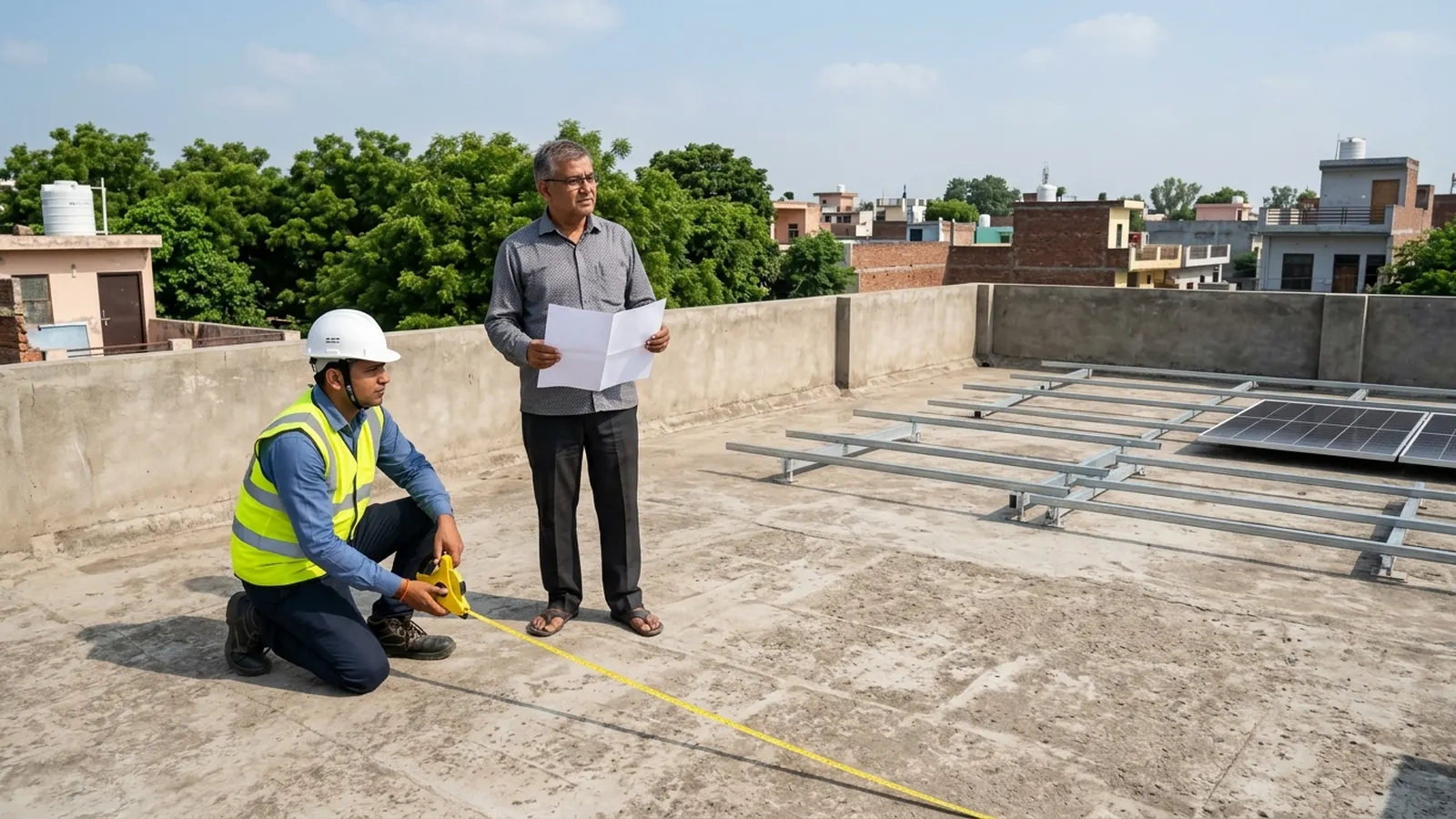
- Free site survey and quotation — the vendor checks your roof, load and shade, and gives a written price with subsidy.
- Register on the PM Surya Ghar portal — select Haryana, your DISCOM (DHBVN or UHBVN), enter your consumer number, mobile and email, then apply for rooftop solar.
- Feasibility approval — the DISCOM checks the application and gives technical feasibility. The vendor agreement is uploaded.
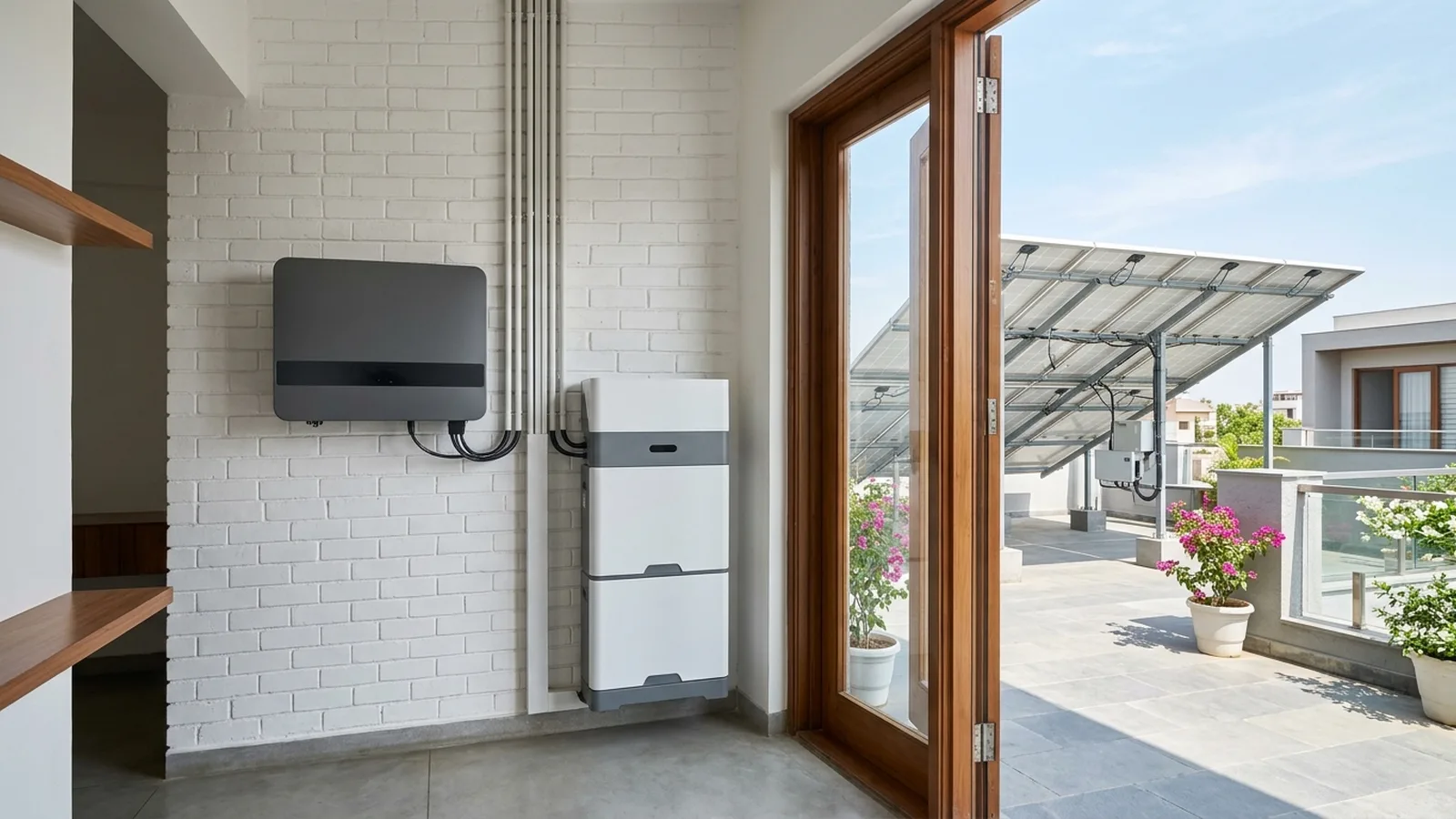
- Installation — structure, DCR panels, inverter, earthing and lightning arrestor. This takes about 1–2 days.
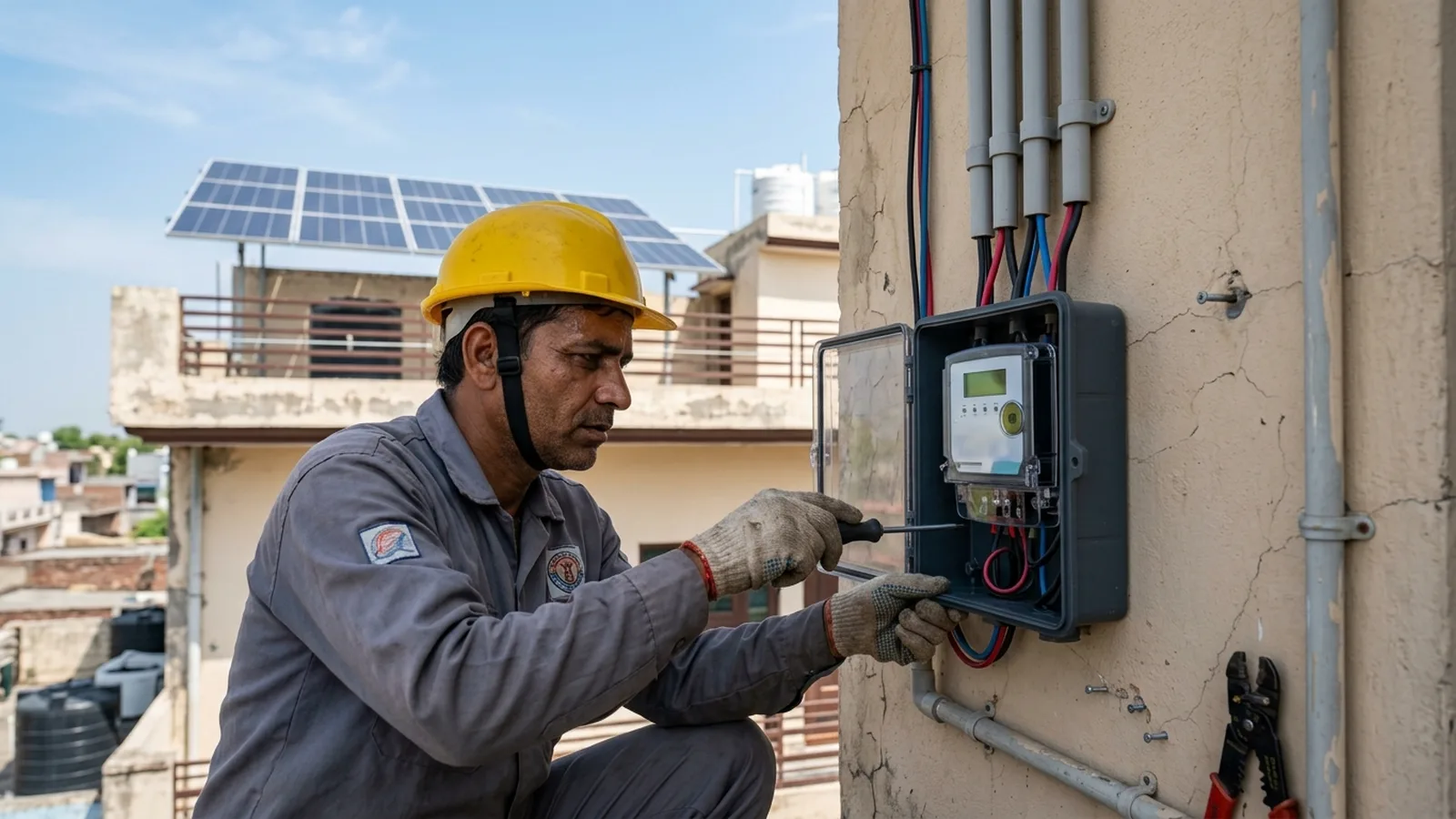
- Net meter and inspection — the net meter application is made, the DISCOM installs the net meter, inspects the plant and commissions it. This usually takes 2–4 weeks.
- Subsidy in your account — after commissioning, your bank details are submitted on the portal and the subsidy is released directly to you.
Common mistakes that delay the subsidy
- Name on the electricity bill and the bank account do not match
- Non-DCR panels or a vendor who is not empanelled
- Wrong mobile number or email on the portal (OTPs never arrive)
- Sanctioned load too low for the system size — a load extension is needed first
How much will it cost after subsidy?
For a typical 3 kW system: about ₹1,80,000 (indicative, GST included) − ₹78,000 subsidy = about ₹1,02,000. It makes about 405 units a month — at ₹7/unit that is about ₹2,835 saved every month. Want EMI instead of a big payment? Check the EMI calculator.
Let us do the paperwork
Zento Solar is empanelled with DHBVN and UHBVN. We do the portal registration, feasibility, installation, net meter and subsidy follow-up for you — aap bas documents dijiye. See the PM Surya Ghar page for amounts and FAQs, or book a free site survey.
Note: subsidy amounts follow the current central scheme rules; if the government changes them, this page updates with the new figures.